
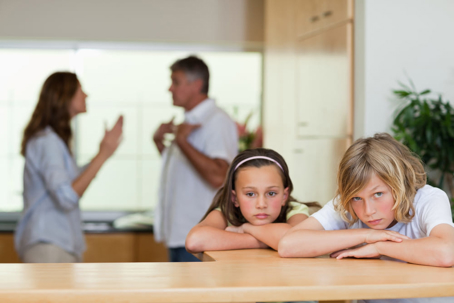
Your child still has homework, soccer at Girsh Park, and a science project due on Friday. Meanwhile, you are trying to divide property, sort out new housing, and get through hard conversations about divorce. It can feel like two separate worlds, school and family court, are colliding in the middle of your kitchen table.
Parents in Santa Barbara often say they want to protect their child’s school life from the divorce, but they have no idea how to do that in practice. They worry about their child breaking down at Monroe Elementary, getting caught between parents at pick up, or missing class for court dates. They also worry about what to tell teachers and how much the Santa Barbara school system will actually cooperate.
Parents in Santa Barbara County who are going through divorce still have to deal with school calendars, drop-off lines, and aftercare at places like the YMCA or on-campus programs. This guide walks through how divorce, kids, and school intersect in Santa Barbara, what choices you actually have, and how to avoid the school-related conflicts that quietly drive up stress and legal fees. The goal is to keep your child’s school life as stable as possible while you restructure your family.
Navigating divorce while your child is in school can feel overwhelming. Speak with a Santa Barbara family law attorney—schedule a consultation online or call (805) 422-7966.
How Divorce Interacts With School Life In Santa Barbara
Divorce affects more than where your child sleeps. It touches attendance, transportation, after-school schedules, and even who the school is allowed to talk to. In Santa Barbara, most public schools in the Santa Barbara Unified School District, Goleta Union, and Hope School District follow similar rules about parents’ rights, but how those rules work in real life depends a lot on your custody orders and how you and your co-parent communicate.
The school staff that deals with your child every day, such as classroom teachers, the front office, and counseling staff, usually only know what you tell them and what they see. If they are not clear on which parent has legal custody, who can pick up the child, or where to send report cards, they may fall back on old information or make assumptions. That can create frustrating situations, like one parent finding out about conferences or discipline issues after the fact.
From a legal standpoint, California family courts and local schools are separate systems that have to work together through paperwork and communication. The family court issues custody and visitation orders that spell out legal custody, physical custody, and time sharing. Schools implement those orders through their internal records. When parents keep the school out of the loop or send conflicting messages, the school ends up caught in the middle, and your child feels that confusion in the form of missed messages, schedule mix-ups, and tension at pick-up.
Legal Custody, School Decisions & Access To Information
Many parents in Santa Barbara have joint legal custody, which means both have the right to participate in major educational decisions. This can include decisions about changing schools, approving assessments for learning issues, and agreeing to counseling through the school. If you have a custody order from the Santa Barbara County Superior Court, it usually spells out whether legal custody is joint or sole, and that language has real consequences for who can make school-related choices.
If one parent has sole legal custody, that parent typically has the final say on educational decisions. The other parent may still access records under California law, but the school will usually follow the instructions of the sole legal custodian on things like Individualized Education Program (IEP) participation, 504 plans, and consent for evaluations. Many parents do not realize this distinction until there is a disagreement about special education services or counseling referrals.
Access to school information is another concrete issue. In California, both parents generally have a right to records, unless a court order limits that right. In practice, that means you can usually request your child’s report cards, attendance records, and discipline notes from the school office, whether you are the primary custodial parent or not. To make this work smoothly, it helps to give the school a copy of your custody order and confirm that both parents’ emails are in the system for the parent portal and teacher communications, instead of relying on one parent to forward everything.
Deciding What To Tell The School & When
Many parents hesitate to tell the school about a pending divorce because they want to keep their child’s life “normal.” The problem is that schools in Santa Barbara, including neighborhood schools like Adams Elementary or La Colina Junior High, notice when a child’s mood, focus, or attendance changes. If staff are not told why, they may misinterpret those changes as behavior issues or a simple lack of effort, instead of a reaction to family changes.
A practical approach is to share only the information that affects your child’s day at school and the school’s legal responsibilities. That generally includes who has legal custody, any changes to emergency contacts and pick up permissions, and whether the child is moving between households during the school week. It can also include a simple statement that the family is going through a divorce, so teachers understand that emotional shifts may be temporary and connected to stress at home.
You do not need to share private details about finances, infidelity, or blame. A short, factual email to the principal or counselor can be enough. For example, you might explain that the parents have separated, the child will be living in two homes, and both parents should receive school communications. Sharing this early, ideally when schedules change or before the new term, lets the school plan for any needed support and reduces the chance of miscommunication at pick up or during school trips.
Coordinating Pick Ups, Drop Offs & Transportation
Daily transportation is one of the first contact points between divorce and school routines. In Santa Barbara, parents may juggle neighborhood school drops off, car lines at campuses like Washington Elementary, city bus routes for older kids, and transitions between homes in different neighborhoods. Without a clear plan, these hand-offs can become emotional flashpoints that kids start to dread.
Courts in Santa Barbara County often expect parents to have a specific parenting plan that spells out which parent handles school transportation on which days. This can be as detailed as naming which parent drops off and which parent picks up on particular weekdays, and where exchanges happen when the child is moving from one home to the other. Clear written plans reduce last-minute texts and arguments in the parking lot, which your child and school staff both see.
From a practical standpoint, it usually works better to keep exchanges away from the classroom door. Some families choose a neutral spot between homes, such as a park or parking area, for transitions on school days. Others arrange for one parent to handle both drop off and pick up on their custodial days, so the child experiences fewer adult interactions at school. Whatever structure you choose, put it in writing in your parenting plan and give the school office a simple version so staff know who to release the child to on which days.
Handling School Absences For Court, Moves & Transitions
Divorce can create more daytime appointments than usual, including court hearings at the Santa Barbara County courthouse on Anacapa Street, mediation sessions, and meetings with attorneys or therapists. If you pull your child out of school for every event, even for understandable reasons, those absences add up quickly and can hurt both learning and the child’s sense of stability. Schools track attendance closely, and too many unexcused absences can trigger intervention.
Whenever possible, schedule adult-focused events when your child is in school, so they are not sitting in the courthouse hallway or law office waiting room. Your child generally does not need to attend most court hearings in a divorce case. If your attorney tells you that the judge wants to hear from the child, there are usually procedures for that, and it is not something you should manage alone. Keeping your child out of legal proceedings protects them emotionally and avoids missed class time.
For necessary appointments that genuinely require your child, such as counseling or evaluations, try to coordinate with the teacher to minimize class disruption. A mid-morning or late afternoon appointment may be less disruptive than pulling your child out of the same class repeatedly. Always communicate with the attendance office about why your child is absent. If absences relate to the divorce or a move between homes in different school zones, a short explanation to the principal or counselor can help the school respond with support instead of treating the situation as a truancy problem.
School Choice, Moves & Staying In The Same Classroom
Housing changes during divorce often raise a hard question: does the child stay at the same school or move to a new one closer to one parent’s home? In Santa Barbara, that decision can interact with district boundaries, transfer policies, and your custody orders. For example, moving from a home in the Goleta Union School District to a rental closer to downtown Santa Barbara might technically place your child in a new attendance area, even if the old school is only a short drive away.
Court orders and parenting plans often try to preserve school stability, particularly in the year of separation, because school can act as a steady anchor when everything else is changing. Keeping the same teacher, classmates, and campus routines can give your child a place where life still feels familiar. However, this has to be balanced against commute times, parents’ work schedules, and the practical realities of shared custody. A long round-trip drive twice a day might be fine for a few months, but much harder to sustain long term.
If you are considering a move, talk early with your attorney about how school choice fits into your custody case. In some situations, you and your co-parent can agree in writing to keep the child in the current school even after a move, using transfer requests or intra-district options. In other situations, one parent may seek court orders about educational decisions. Because Santa Barbara area districts have specific forms and timelines for transfers, waiting until the last minute can limit your options and force a rushed school change that is harder on your child.
Working With Teachers, Counselors & School Staff
Teachers in Santa Barbara classrooms are often the first adults outside the family to see changes in a child’s behavior during divorce. They may notice more tears at drop off, incomplete assignments, or conflicts with peers. When you invite teachers and school counselors into the loop appropriately, they can monitor these changes and respond with strategies that support rather than punish your child.
A short, focused meeting with the teacher and, if available, the school counselor can make a big difference. In that meeting, you can share that a divorce is in progress, clarify that both parents love and support the child, and ask what the teacher is seeing in the classroom. You can also explain any schedule changes, such as days the child arrives from the other parent’s home or attends therapy after school. This gives staff practical context for late homework, mood swings, or fatigue.
It is also useful to agree on a communication method that avoids triangulation. For example, you might ask the teacher to send one email to both parents, instead of separate emails that can create different stories. This helps prevent situations where one parent hears about a concern, and the other does not, then conflict spills into legal discussions. Consistent three-way communication between you, the co-parent, and the school supports your child and reduces misunderstandings.
Supporting Your Child’s Emotional Health Around School
Even if school remains the same on paper, your child’s emotional experience of school often changes during divorce. Some children cling at drop off, others act like everything is fine and hold their feelings until they get home. Kids in Santa Barbara schools juggle academics, friendships, and extracurriculars like music in school programs or sports at local fields, all while trying to make sense of two homes and new routines.
You can help by keeping certain school-related routines steady across both households. For example, both homes can use the same homework binder system, the same bedtime window on school nights, and similar rules about screen time before school. Children feel more secure when the basic structure of school days stays similar, even if the adults have different styles in other areas. This kind of consistency also makes it easier for teachers to understand what to expect from your child.
Emotional check-ins tied to school can also help. Brief questions like “How was lunch today?” or “Did anything feel hard at recess?” are often more effective than broad questions about feelings. If your child seems more anxious about school during transitions between homes, share that pattern with the teacher or counselor. In some cases, counseling support at school or outside therapy coordinated with the school schedule can give your child a safe space to process, without turning every school day into a conversation about divorce.
Managing Homework, Projects & School Communication Across Two Homes
Homework and school projects are where many co-parents feel the daily friction of divorce. Papers get left at one house, supplies sit in the wrong backpack, and online assignments require logins that only one parent has. In Santa Barbara, where many schools use online portals for assignments and grades, parents need a practical system that does not rely on constant crisis texting.
One effective step is to set up shared access to school portals and communication apps. If your child’s school uses an online gradebook or communication platform, make sure both parents have their own logins or are on the same email distribution lists. This lets each parent see assignments, announcements, and deadlines directly, instead of depending on the other parent to forward messages. It also reduces the chance that a big project or performance at the school auditorium surprises one parent at the last minute.
A physical system still matters. Some families use a designated “school folder” that travels in the backpack and holds important papers for both homes. Others maintain a small set of basic supplies at each house, so last-minute poster projects do not require late-night drives. Whatever method you choose, put the rules in your parenting plan if school issues have already led to conflict. That way, if one parent consistently refuses to send homework or school items, there is a written standard that your attorney can point to in court if needed.
Handling School Events, Conferences & Performances Without Conflict
Back-to-school night, parent-teacher conferences, concerts, and sports events can be emotionally charged during divorce. Both parents may want to attend, and both may worry about awkward or hostile encounters in front of teachers and other families. Children often watch closely at these events and pick up on discomfort, even if no one argues out loud.
In many cases, it is better for your child if both parents attend major school events peacefully, rather than alternating or excluding one parent. Seeing both parents show up for a performance or award assembly sends a powerful message that school remains a shared priority. However, this only works if you and your co-parent can maintain basic courtesy and avoid discussing legal disputes at school.
For conferences, some families choose joint meetings, while others schedule separate ones to reduce tension. Schools in Santa Barbara are generally willing to accommodate separate conference times if requested in advance. The key is to let the teacher know what arrangement you prefer and to focus both meetings on your child’s progress, not on airing grievances about the other parent. If conflict at school events has already been a problem, talk with your attorney about including expectations for behavior at school functions in your parenting plan.
Common School-Related Conflicts In Santa Barbara Divorces & How To Prevent Them
Most school-related legal conflicts do not start as giant issues. They start as small, repeated frustrations that build over time. For example, one parent might routinely “forget” to list the other parent as an emergency contact, withhold information about IEP meetings, or change pick up plans without notice. In Santa Barbara, these patterns sometimes lead to emergency court hearings when one parent claims the other is interfering with their relationship or putting the child at risk.
Typical hot spots include changing the child’s school without agreement, blocking the other parent from accessing school records, or showing up unannounced at school to confront the child or staff. Another recurring problem is using school staff as messengers, such as asking teachers to pass notes between parents or to “take sides” in custody disputes. These behaviors can alarm schools and may result in restrictions, such as requiring that communication go through the principal.
Prevention usually looks less dramatic and more administrative. Provide the school with a current copy of your custody orders. Confirm that both parents’ contact details are on file. Put clear language in your parenting plan about educational decisions, transportation, and protocol for emergencies. When problems surface, document them in writing and talk with your attorney before reacting at school. This approach protects your child’s daily experience and also creates a clear record if the court needs to address the issue later.
When To Involve Your Attorney About School Issues
Not every school hiccup requires legal action. A forgotten backpack or a miscommunication about a field trip can usually be solved with a calm email. However, certain patterns are red flags that you should discuss with your family law attorney, because they may indicate violations of your custody orders or behavior that affects your child’s well-being at school.
Examples include one parent unilaterally enrolling the child in a new school without notice, blocking the other parent from attending conferences or accessing records, or repeatedly failing to follow transportation terms in the parenting plan. Serious incidents, such as a parent creating a scene at school, attempting to remove the child against school instructions, or involving the child in conversations about court battles on campus, also deserve prompt legal attention. Schools may document these events, and that documentation can become important evidence.
A family law attorney who regularly handles Santa Barbara custody matters can help you decide whether a particular school-related problem is best handled through a revised parenting plan, a clarifying letter, or a court request. Addressing these issues early, rather than waiting until the end of the school year, often protects your child and reduces long-term conflict. It also shows the court that you are focusing on practical solutions that support your child’s education, instead of using school as another battleground.
Plan The Next Step For Your Child’s School Year
Divorce, kids, and school in Santa Barbara intersect in very concrete ways, from who waits at the Jefferson Elementary pick-up line to who signs the permission slip for a field trip. You do not have to solve every issue at once, but you can decide on the next practical step that will make your child’s school life calmer, such as clarifying transportation, updating school records, or revising your parenting plan to match the school year.
If school-related questions are causing regular arguments or you are unsure how your custody orders apply to real school situations, a focused conversation with a family law attorney can bring the legal and day-to-day pieces together. You can review your current orders, map them onto your child’s specific school schedule, and build a plan that keeps your child’s classroom as steady as possible while the rest of life changes.
Have questions about divorce, custody, and your child’s school in Santa Barbara? Talk to a family law attorney—schedule online or call (805) 422-7966 to create a plan that supports your child’s stability.