
Santa Barbara Child Support Lawyer
Certified Family Law Specialist Serving Santa Barbara Since 2011
Child support cases rarely follow a simple path. Establishing an initial order, contesting a number the other parent put forward, uncovering income they didn’t disclose, or returning to court when circumstances change: each stage requires a different legal approach. At Morales Law, P.C., our practice is limited to family law, which means every case we handle involves these same issues. Marcus Morales is a Certified Family Law Specialist, a designation issued by the California State Bar Board of Legal Specialization that requires passing a rigorous examination and demonstrating substantial, documented involvement in family law. We have represented Santa Barbara clients in child support matters since 2011.
Whether you’re seeking to establish an order, modify one, or enforce a judgment the other parent has been ignoring, we can help. We offer free consultations to prospective clients so you can understand your options before making any commitment.
Unsure of your child support obligations or rights? Call the Santa Barbara child support attorneys at Morales Law, P.C. at (805) 422-7966 or contact us online.
Child Support Agreements Between Parents
Parents may reach their own agreement on child support. California courts, however, aren’t bound by those arrangements. Under Hoover-Reynolds v. Superior Court (1996) 50 Cal. App. 4th 1273, a court may make a different support award if the facts and circumstances support it, regardless of what the parties agreed to privately.
A court also retains the authority to modify any child support order upward or downward at any time, no matter what the parties’ agreement says. Parents can’t waive or limit the right to receive child support. Both rules exist for the same reason: child support belongs to the child, not the parents.
How Long Does Child Support Last in California?
Child support generally continues until the child turns 18. There is one important exception: if the child is 18, unmarried, a full-time high school student, and not self-supporting, the obligation continues until the child completes 12th grade or turns 19, whichever comes first.
Other events that may end the obligation early include the child’s death, emancipation, marriage, or entry into the armed forces. A parent can’t unilaterally stop paying when one of these events occurs. The appropriate step is a court order terminating the obligation, and until that order exists, the payment obligation remains.
The California Child Support Formula
California uses a statutory guideline formula to calculate child support:
CS = K[HN − (H%)(TN)]
- CS – Child support amount
- K – Combined total of both parents’ income allocated for child support
- HN – Higher-earning parent’s net monthly disposable income
- H% – Approximate percentage of time the higher earner has primary physical responsibility for the children
- TN – Total net monthly disposable income of both parties
Inputs include gross income, mandatory payroll deductions, income tax deductions, and childcare costs. The formula produces a guideline figure, but courts may deviate from it under specific conditions: when a parent earns an extremely high income and the guideline amount would exceed the child’s needs, when both parents share equal time but one carries a significantly higher share of housing costs, when special medical needs apply, or when a parent isn’t contributing to the child’s needs in proportion to their custodial time.
Certain add-ons apply on top of the base support amount. Under California Family Code Section 4062, mandatory add-ons include childcare costs related to a parent’s employment or education and training for employment skills, and reasonable healthcare costs not covered by insurance. Discretionary add-ons can include additional education-related expenses and travel costs for visitation.
Calculating Child Support in Santa Barbara County
Santa Barbara County Superior Court proceedings use DissoMaster software to run guideline calculations, factoring in each party’s income, custodial time, deductions, and other variables. The output is what the court uses as its starting point.
Morales Law, P.C. holds DissoMaster in-house. Before you walk into a hearing, we can run the numbers and give you an estimate of what support may look like in your case. That estimate can help you decide whether to negotiate or litigate and what a reasonable range may look like.
We have DissoMaster software in-house and can estimate what your child support payments may be. Call (805) 422-7966 today for a free consultation with a Santa Barbara child support attorney.
Hidden Income and DCSS Involvement
Some of the most consequential disputes in child support cases involve income a party hasn’t accurately disclosed. Discovery is the tool for uncovering it. Bank deposit patterns often reflect more income than a party reported on their tax return. 1099 forms are particularly useful for self-employed individuals who may have significant earnings that don’t appear on a W-2. When the financials are complex or irregularities suggest income is being concealed, we work with CPAs and forensic accountants to build a complete picture.
Our Santa Barbara child support attorneys have found opposing parties’ attempts to hide millions of dollars through discovery, leading to substantial increases in support for our clients. These are past results in specific cases, not a promise of what any future case will produce, but they reflect what rigorous financial investigation may uncover when a party isn’t being candid about their income.
When a party receives public assistance, the Department of Child Support Services (DCSS) may become involved. DCSS can file and collect child support on behalf of the receiving party and, for qualifying individuals, can assist free of charge in determining the appropriate support amount and collecting arrears.
Santa Barbara County Superior Court Local Rule 1419
When child support, spousal support, or attorney fees are at issue in a Santa Barbara County case, Local Rule 1419 requires each party to provide specific financial disclosures to the other. What must be disclosed depends on the party’s employment situation.
Wage-earners and unemployed parties
Must disclose federal income tax returns for the two most recent years, bank statements for all personal accounts for the 12 most recent months, all W-2s and 1099s received in the past 12 months, a copy of Local Rule 1419, and a declaration explaining any failure to comply.
Self-employed parties or those owning 30% or more of a business
Must provide everything listed above, plus profit and loss statements and balance sheets for the past 12 months, all personal bank account statements and check registers for the past 12 months, all loan applications submitted in the past 12 months, and either a copy of the business books and records or a written offer to permit inspection on five days’ notice.
Local Rule 1418, amended effective April 1, 2025, also requires each party to file and serve a supporting declaration setting forth their calculation of child support in all matters where child support or temporary spousal support is at issue. Compliance with these local rules matters: gaps in disclosure give the other side grounds to challenge your numbers and can affect the court’s assessment of credibility.
Health Insurance in Child Support Orders
In any case where a current child support order is issued, California courts must require that health insurance coverage for the supported children be maintained by either or both parents, provided that coverage is available at no cost or at a reasonable cost. The cost of that insurance is in addition to the base child support amount ordered. Reasonable healthcare costs not covered by insurance are treated as mandatory add-ons and can increase the total obligation beyond the guideline figure.
When a Parent Stops Paying: Enforcement Options
Morales Law, P.C. handles enforcement proceedings in addition to establishment and modification work. When a parent fails to pay a court-ordered amount, the receiving parent has several legal tools available.
- Wage withholding: A child support garnishment takes priority over other wage garnishment orders under California law, meaning the obligation comes out first.
- Bank levies: When a parent falls into arrears, their bank account may be levied. Where DCSS is enforcing the obligation, it may issue a levy directly under California Family Code Section 17522. A custodial parent enforcing support independently may pursue a bank levy through a court-issued writ of execution.
- Tax refund interception: State and federal income tax refunds can be intercepted and applied to unpaid child support.
- License suspension: Non-paying parents may have their driver’s license, professional licenses, and passport suspended or revoked.
- Contempt of Court: Willful non-payment can result in contempt proceedings, which carry their own legal consequences.
If you’re owed support that isn’t being paid, or if you’re facing enforcement action based on an amount you believe is inaccurate, contact our Santa Barbara child support lawyers to discuss your options.
Modifying an Existing Child Support Order
A change in income, employment status, or custody arrangements can each justify revisiting an existing order. At Morales Law, P.C., we guide clients through the modification process and work to keep the updated order aligned with their current situation.
Common reasons to seek a modification include:
- Job loss or income reduction: A significant pay cut or job loss can support a petition to reduce the obligation.
- Increased income: If the paying parent’s financial situation has improved substantially, the receiving parent may seek an upward adjustment.
- Changes in custody: A shift in custodial time changes the H% variable in the guideline formula, which directly affects the support amount.
- New child-related expenses: Healthcare costs, education expenses, or childcare changes can each warrant a review of the existing order.
Courts must approve any modification. Parties can’t informally agree to change the amount without a new court order, and a parent must continue paying the existing amount until one is issued, even when the circumstances clearly warrant a reduction.
Why Work With a Certified Family Law Specialist on Your Child Support Case
Marcus Morales holds the Certified Family Law Specialist designation from the California State Bar Board of Legal Specialization. That credential reflects examination-based competency and peer-reviewed experience, not simply years of practice. Because our firm is limited to family law, every matter we handle involves the same statutes, local rules, and court procedures that govern your case.
What that means in practice for child support clients:
- DissoMaster in-house: We run guideline calculations before proceedings begin so you walk in with realistic expectations, not guesses.
- Forensic financial investigation: When income is being concealed, we work with CPAs and forensic accountants and use discovery to build a complete financial picture. Our attorneys have uncovered attempts to hide millions of dollars in past cases.
- Trial preparation: We prepare every case as if it will be litigated. If negotiation doesn’t resolve the matter, we don’t need to shift gears.
- Full-scope representation: We handle establishment, modification, and enforcement under one roof.
- Free consultations: You can speak with our team about your situation before making any financial commitment to representation.
If you’re facing a child support matter in Santa Barbara County, contact Morales Law, P.C. to schedule your free consultation.
Helpful Resources

Dedicated Legal Counsel
For Your Family
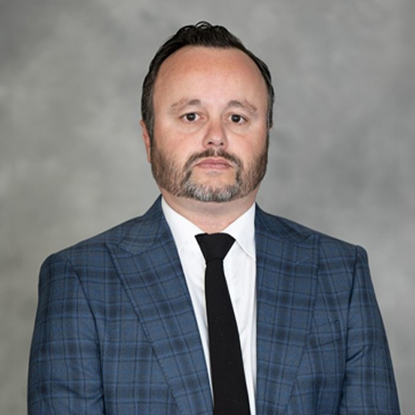
Working with attorney Marcus Morales and the team at Morales Law means getting a responsive and personalized experience. We know what you’re up against, and we understand you’re working with us because you’ve reached a difficult point in your life. We want to help. Contact us today.

Schedule Your Free Consultation
Call (805) 422-7966 today to speak with a Santa Barbara child support attorney at Morales Law, P.C., or request an appointment online. There’s no cost to your first consultation, and no obligation after it.
*All information on this website is for information purposes only. This website and the information herein should not be construed as legal advice or be relied upon without first consulting an attorney.
-
"His confidence and compassion helped ease my stress"
I am so grateful I chose Morales Law to help me with my child custody case. Marcus Morales truly took the time to learn about my case and his attention detail was highly appreciated. He is easy to get in contact with, and made me feel like every conversation was important to him. He is strong and intelligent while in the courtroom. His confidence and compassion helped ease my stress throughout a high stress point of my life.- Sarah H. -
"look no further than Morales Law"
Morales Law handled my complex, and highly contentious, custody and move away case. After my first phone call with Mr. Morales I immediately knew I wanted him and his team to represent my family and I. Everyone at Morales Law displays professionalism, courtesy, and thorough knowledge of the family court system. Mr. Morales is a well-respected attorney who will go to bat for you in the courtroom. His team always got back to me in a prompt manner and kept me up to date with every single detail of my case. In all, if you're in need of legal assistance with your family matter, look no further than Morales Law.- Valanci V.