
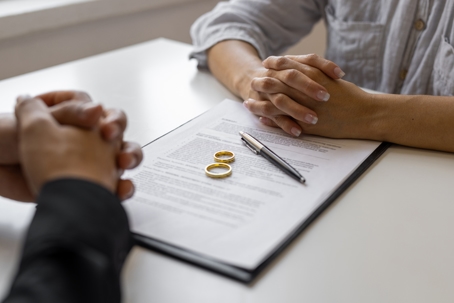
Divorce can be a challenging time, and navigating the legal process can add to the stress. As Certified Family Law Specialists in Santa Barbara, we want to provide a clear, step-by-step guide to help you understand the forms and process for filing for divorce in our county.
Step 1: Meet Residency Requirements
Before you can file for divorce in Santa Barbara County, at least one spouse must have lived in California for a minimum of six months and in Santa Barbara County for three months. This is a crucial first step, as the court cannot hear your case if these requirements aren't met.
Step 2: Prepare and File Your Initial Divorce Papers
This is where you officially begin the divorce process.
- Petition — Marriage/Domestic Partnership (FL-100): This is the foundational document that starts your divorce case. On this form, you'll provide essential information about your marriage, such as the date of marriage, date of separation, and whether you have minor children. You'll also indicate what orders you are requesting, such as spousal support, attorney's fees, and how you want property and debts divided. If you're unsure about the exact nature and extent of community or separate property and debts at this stage, you can state that they are "unknown to Petitioner at this time" and request leave to amend later.
- Summons (Family Law) (FL-110): This form informs your spouse that a court case has begun and outlines what can happen if they don't file a response within 30 days. It also contains critical automatic restraining orders on page 2. These orders prevent both parties from making changes to insurance beneficiaries, removing minor children from the state, or altering community or separate property without a court order or written consent, among other things. You are allowed to use community property, quasi-community property, or separate property to pay court costs and attorney fees.
- Declaration Under Uniform Child Custody Jurisdiction and Enforcement Act (UCCJEA) (FL-105): If you and your spouse have children under 18, you must include this form. It provides the court with information about your children's birthplaces, residences, and any other court cases involving them.
- Optional: Property Declaration (FL-160) or Schedule of Assets and Debts (FL-142): If you need more space than the FL-100 allows to list your property and debts, or if you want to provide a more detailed breakdown, you can attach one of these optional forms. On these forms, you'll list all your assets and debts and specify whether you believe they are community or separate property.
- Optional: Child Custody and Visitation (Parenting Time) Application Attachment (FL-311): This optional form can be attached to your Petition (FL-100) if you have children, helping to ensure you don't miss any details in your custody and visitation requests.
Once these forms are completed, you will file the originals with the Santa Barbara County Superior Court clerk's office. Make at least two copies: one for your records and one to be served on your spouse. You can also electronically file these documents by going to the filing portal at www.sbcourts.org.
Step 3: Serve Your Spouse
After filing your initial documents, you must formally "serve" your spouse with copies of the Petition and Summons, along with any other documents you filed (like the FL-105 or FL-160), and a blank copy of the Response — Marriage/Domestic Partnership (FL-120). This step ensures your spouse is legally notified of the divorce proceedings.
- Who can serve the papers? The papers must be served by an adult (18 or older) who is not involved in the case. This can be a professional process server, a county sheriff, or even a friend or family member, as long as they meet the criteria.
- Proof of Service of Summons (Family Law — Uniform Parentage — Custody and Support) (FL-115): The person who serves the documents must complete and sign this form. This form tells the court when and where the papers were served and by whom. It is crucial to file this form with the court after service is completed, as it officially notifies the court that your spouse has been served.
Step 4: The 30-Day Response Period
Once served, your spouse has 30 days to file a response to your petition using the Response — Marriage/Domestic Partnership (FL-120) form. If they do not respond within this timeframe, you may be able to proceed with a default divorce.
Step 5: Exchange Financial Information (Disclosures)
Both parties are required to exchange detailed financial information. This typically involves:
- Declaration of Disclosure (FL-140): This is a cover sheet for the financial documents you will share with your spouse. You must sign it.
- Income and Expense Declaration (FL-150): This form requires you to provide information about your income, expenses, and attachments of your income proof from the past two months.
- Schedule of Assets and Debts (FL-142) or Property Declaration (FL-160): These forms (or an equivalent) detail all your assets and debts.
- FL-141: This form must be filed with the Court in order to finalize your divorce case.
Step 6: Finalize Your Divorce
California has a mandatory six-month waiting period from the date your spouse is served (or the date they appear in court, whichever comes first) before your divorce can be finalized. During this time, parties can negotiate settlements regarding property division, child custody, child support, and spousal support. If an agreement is reached, the judge can sign the final judgment without either spouse having to appear in court, provided all documents are correctly completed.
Filing for divorce can be complex, and understanding the forms and procedures is vital. While this guide provides a general overview, every case is unique. Consulting with a Certified Family Law Specialist can help ensure you navigate this process effectively and protect your rights.